The Journey to AI Maturity in Africa.
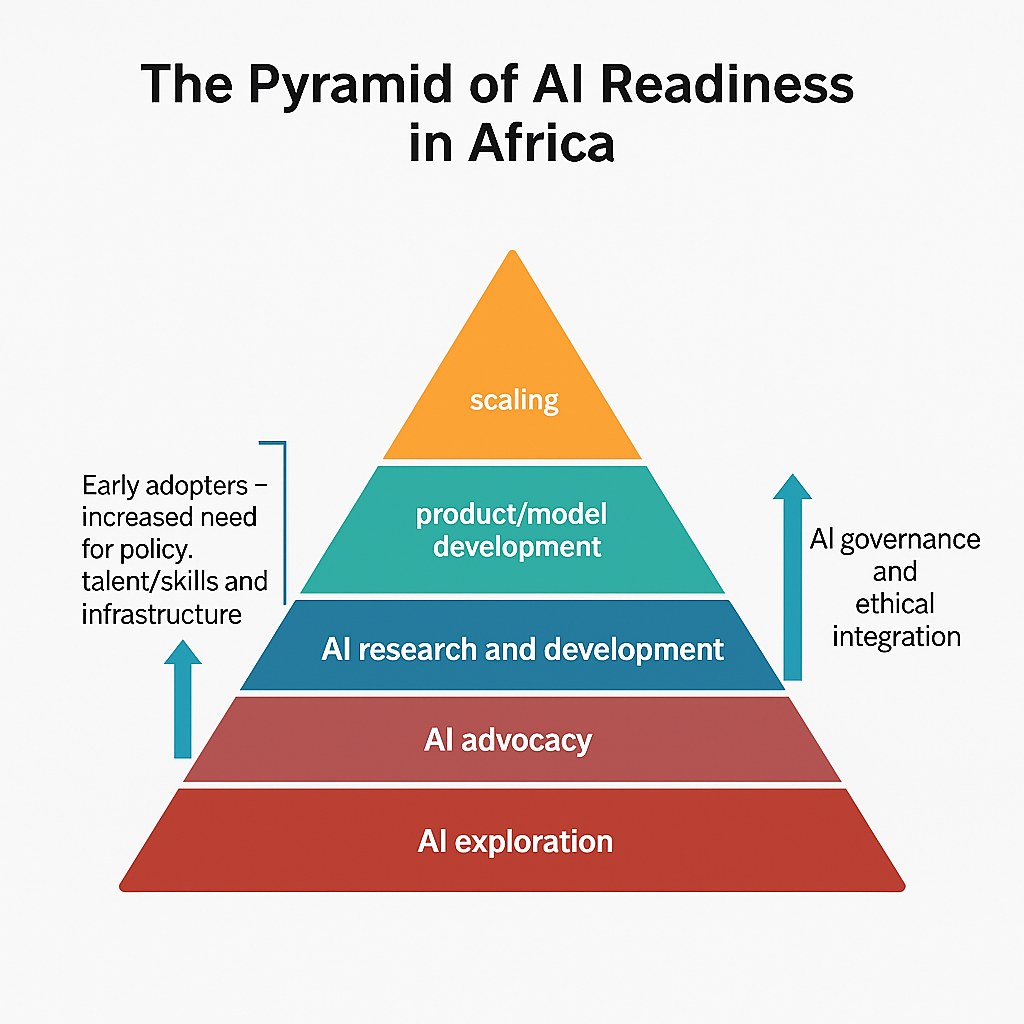
Around the world, AI is no longer a futuristic concept but a present-day reality transforming industries and societies. For Africa, embracing AI is a critical step towards economic growth, innovation, and solving unique challenges. However, the path to AI maturity is not linear. It’s a journey best understood as a pyramid of readiness, where each level builds on the one below in a process of incremental growth.
Level 1: AI Exploration
The foundation of AI readiness is AI exploration. At this stage, organizations and countries are in the discovery phase. This is about building awareness of AI’s potential and its relevance to local contexts. The primary focus is on understanding what AI is, its various applications (such as in agriculture, healthcare, and finance), and the different tools available. Success at this level requires basic digital literacy and access to foundational knowledge resources. It involves conducting feasibility studies, organizing workshops, and fostering a culture of curiosity around technology. Without this broad-based exploration, the rest of the pyramid cannot be built.
Level 2: AI Advocacy
Once a basic understanding is in place, the next level is AI advocacy. This stage is about generating buy-in and championing the adoption of AI at a broader level. It’s a crucial step in moving from theoretical interest to practical application. This involves influencing policymakers, business leaders, and communities to support AI initiatives in a top down approach. Successful advocacy requires communicating the tangible benefits of AI, showcasing pilot projects, and addressing concerns about job displacement, resource constraints and data privacy. Key requirements for success at this level include strong leadership from both the public and private sectors, a collaborative ecosystem of startups and academia, and dedicated efforts to build public trust in AI.
Level 3: AI Research and Development
With advocacy comes the need for a deeper, more specialized level of engagement: AI research and development (R&D). This is where the core work of building AI capabilities begins. It moves beyond general awareness to a more scientific and engineering-focused approach. This level involves investing in local talent, funding research centers, and encouraging the development of AI models tailored to African datasets and challenges. Success hinges on robust investment in research infrastructure, data collection and labeling, and fostering a strong academic-industrial partnership. It’s about creating an environment where researchers and engineers can innovate and solve problems specific to the continent, such as using AI for crop disease detection or improving logistics in remote areas.
Level 4: Product/Model Development
Building on the R&D foundation, the fourth level is product/model development. This is the stage where research is translated into tangible, market-ready AI products and services. Organizations and startups leverage the research and talent pool to create solutions that can be commercialized. This requires moving from proof-of-concept (PoC) projects to developing minimum viable products (MVPs) that address a specific user need. Success at this level depends on access to a thriving startup ecosystem, relevant skills, venture capital, and a clear understanding of the target market. It’s about creating value and demonstrating the commercial viability of AI-driven solutions.
Level 5: Scaling
The pinnacle of AI readiness is scaling. This is where successful products and models are deployed widely to achieve a significant, continent-wide impact. Scaling is not just about growing a business; it’s about making a societal difference. It involves expanding market reach, securing large-scale funding, and building robust distribution channels. Successfully reaching this level requires a strong regulatory environment, access to reliable and affordable infrastructure (like cloud computing, power supply and high-speed internet), and a mature talent pipeline to manage and maintain the deployed solutions.
The Cross-Cutting Requirements
Throughout this journey, two cross-cutting elements are essential for success:
- AI Governance and Ethical Integration: This runs through every level of the pyramid. From the initial stages of exploration to the final stage of scaling, it’s crucial to consider the ethical implications of AI. This includes developing policies for data privacy, ensuring algorithmic fairness, and building systems that are transparent and accountable. Ignoring this element can lead to public mistrust and hinder progress.
- Early Adopters and Increased Need for Policy, Talent, and Infrastructure: As countries move up the pyramid, the demands for foundational elements increase. Early adopters create a pull for more advanced policy frameworks, a larger talent pool, and more robust digital infrastructure. This feedback loop accelerates the journey towards AI maturity, making it faster and more impactful.
Africa’s AI journey is a pyramid-building exercise. By focusing on each level – from exploration to scaling – while consistently integrating governance and building capacity, the continent can unlock the full potential of AI to drive a new era of prosperity and innovation in the fourth industrial revolution.
Newsletter
New essays, straight to your inbox
Occasional writing on data, AI and policy in Africa. No spam, unsubscribe anytime.
Related reading
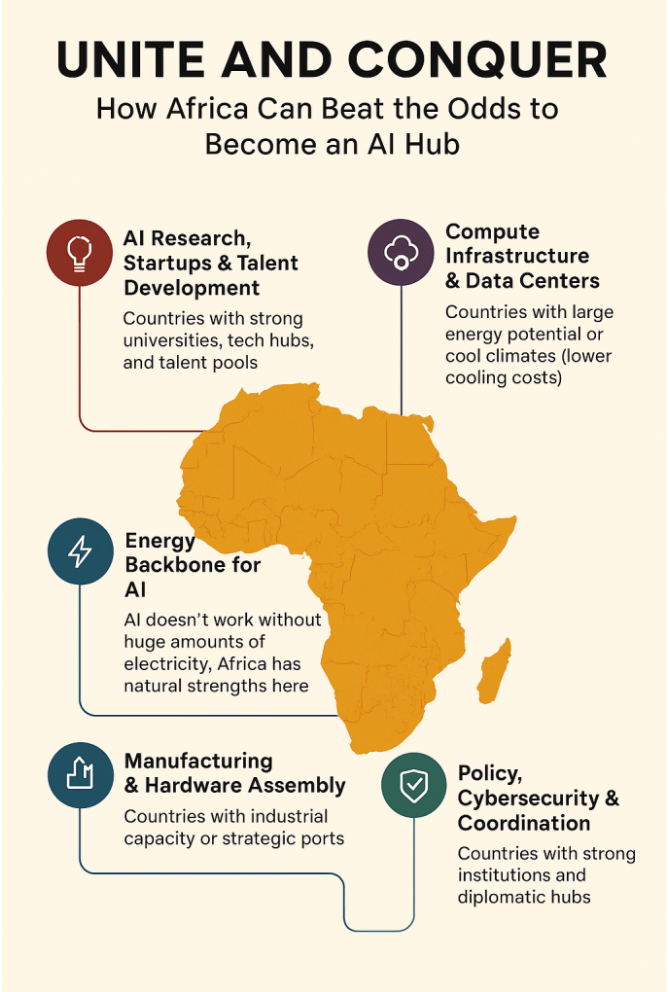
Unite and Conquer – How Africa Can Beat the Odds to Become an AI Hub
A few weeks ago, in his keynote to Kenyans, the president of Kenya admitted that building AI data centers in Kenya (as it is in many countries) is a pipe dream. This followed an agreement signed between Microsoft, The Government of Kenya and G42. He admitted that, to build an efficient data center requires about […]
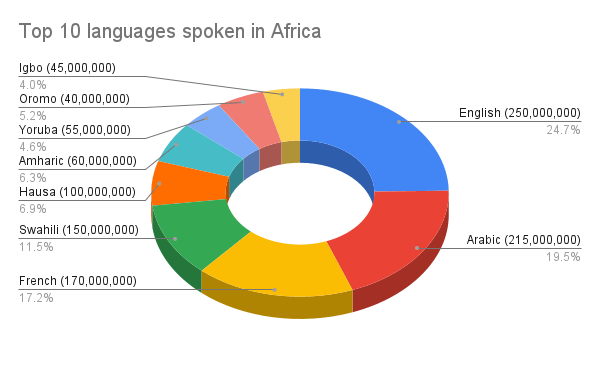
The Paradox of Language Data
A few days ago, speaking to a couple friends, I asked them the cliché thing you ask people who do not speak your native language, ‘how do you say ‘hello’ in your mother-tongue?’. My friends are a little over the youth group age, grew up in a setting where they spoke their native language and […]
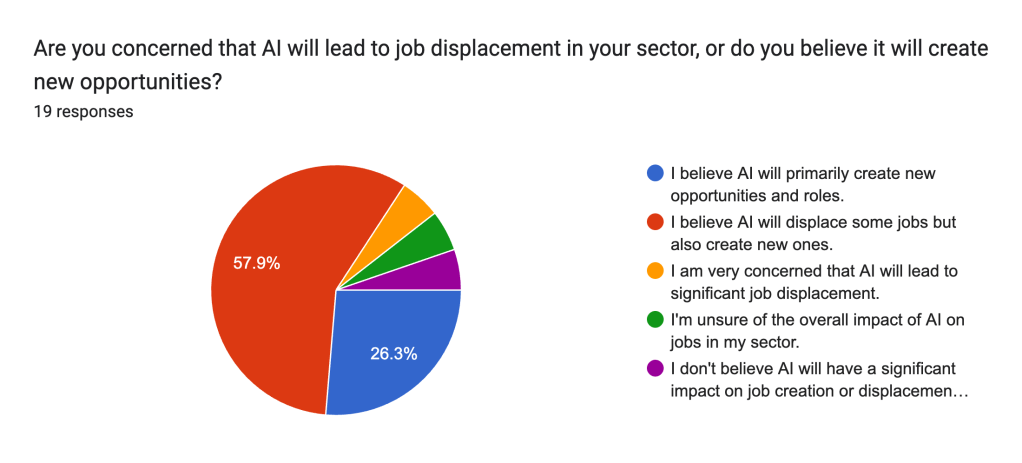
AI in Everyday Work & Life
A couple of weeks ago, I put out a survey on my socials titled ‘AI in Everyday Work & Life: Insights for Policy and Innovation.’ The idea behind this survey was to start to understand how different people are using AI and the new and emerging models in their day to day life, and if […]